
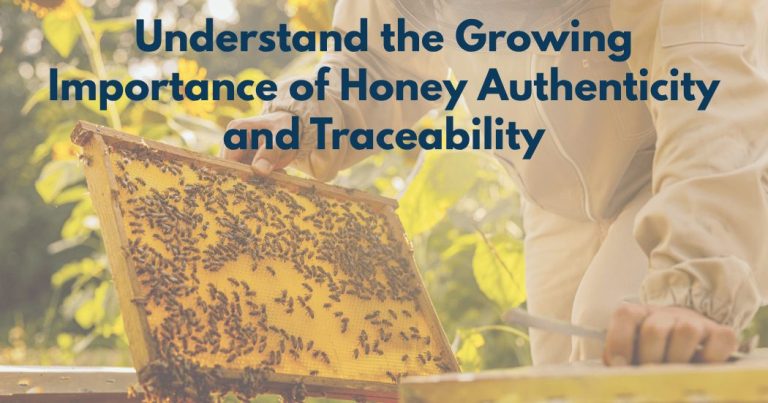
Honey has a valuable reputation among consumers. It is familiar, naturally sourced, and connected to bees, flowers, and the environment. When a food or beverage brand includes honey in a product, that ingredient can become an important part of its flavor, label, and overall story.
However, those benefits depend on the honey being authentic and sourced through a transparent, dependable supply chain.
Honey can travel through several stages before reaching a manufacturer, including beekeepers, processors, exporters, importers, packers, and ingredient suppliers. Without the right verification systems, it can be difficult to confirm where the honey originated, how it was handled, and whether it meets the specifications a company expects.
That is why honey authenticity and traceability are becoming increasingly important to food manufacturers, procurement teams, and consumers.
Authenticity and Traceability Work Together
Although the terms are closely connected, honey authenticity and traceability address different questions.
Authenticity helps determine whether a product is genuine honey and whether it is consistent with its stated origin or characteristics. Traceability creates a documented path showing where the honey came from and how it moved through the supply chain.
Together, these systems provide a clearer picture of the ingredient.
A honey may pass basic quality tests, but manufacturers still need to understand its geographical origin, supplier history, handling, and documentation. Reliable traceability makes it easier to follow an ingredient from the beekeeper through processing, transportation, and final delivery.
This level of visibility is especially important for brands making claims about ingredient quality, sourcing, origin, or sustainability.
Why Honey Supply Chains Require Careful Oversight
Honey is a natural agricultural product, and its characteristics can vary depending on floral source, region, climate, harvest conditions, and processing. These natural differences are part of what makes honey valuable, but they also make strong supplier relationships and quality controls essential.
The global honey industry also faces challenges related to adulteration, misrepresentation, illegal sourcing, and attempts to circumvent trade requirements. Honey may be diluted with other syrups, incorrectly labeled by origin, or moved through countries in ways that make the original source harder to identify.
For manufacturers, these issues can create more than an ingredient-quality problem. They may also result in inconsistent products, incorrect label claims, supply disruptions, regulatory concerns, or damage to consumer trust.
Choosing a low-cost honey without understanding its source may save money initially, but it can expose a brand to much greater costs later.
What True Source Certification Provides
Third-party programs can provide additional accountability beyond a supplier’s internal quality processes.
True Source Certification is a voluntary system created to support honey authenticity, legal sourcing, and traceability throughout the international supply chain.
Participants must maintain documentation covering the honey’s origin, movement, and handling. The program also incorporates authenticity testing and independent third-party audits to assess whether certified participants adhere to its standards.
Each participant has responsibilities based on its role in the supply chain. Beekeepers, exporters, importers, packers, and other businesses must maintain the records and procedures necessary to ensure traceability as honey moves from one stage to the next.
This system helps replace vague sourcing promises with documentation and independent oversight.
Why Traceability Matters to Food Brands
Ingredient transparency is no longer only a procurement concern. It can also influence product development, marketing, quality assurance, and consumer perception.
Food manufacturers need confidence that the honey they purchase:
- Comes from a documented source
- Meets established quality specifications
- Has been evaluated for authenticity
- Supports accurate product and label claims
- Can be traced if a quality or supply issue occurs
- Is sourced in accordance with applicable trade requirements
Traceability can also support greater consistency. When suppliers understand where honey comes from and maintain clear specifications, they are better positioned to help manufacturers manage variations in flavor, color, moisture, and other characteristics.
GloryBee’s quality assurance practices combine supplier requirements, inspections, third-party audits, documentation, and product testing to help protect the purity and quality of honey.
Questions to Ask a Honey Supplier
Before selecting honey for a formulation, procurement and product-development teams should ask more than what the ingredient costs.
Important questions may include:
- Can the honey be traced to its country and source of origin?
- What documentation accompanies each shipment or lot?
- How is the honey tested for purity and authenticity?
- Does an independent third party verify the supplier’s processes?
- How are color, flavor, moisture, and other specifications managed?
- What happens if a product does not meet the agreed-upon requirements?
- How does the supplier evaluate domestic and international partners?
A trustworthy supplier should be prepared to discuss these questions and explain the systems used to protect ingredient integrity.
GloryBee works with carefully evaluated domestic and international partners to provide responsibly sourced honey that meets the varied needs of food manufacturers.
Learn More at IFT FIRST 2026
Authenticity and traceability protect more than an individual shipment of honey. They help protect manufacturers, honest beekeepers, consumers, and the reputation of honey as a valuable food ingredient.
At IFT FIRST 2026, the GloryBee team will be available to discuss sourcing, True Source Certification, quality assurance, testing, documentation, and the questions brands should ask when evaluating a honey supplier.
Visit GloryBee at booth #1672 to learn how a transparent, verified honey supply can support product quality, dependable sourcing, and greater confidence in every formulation.