
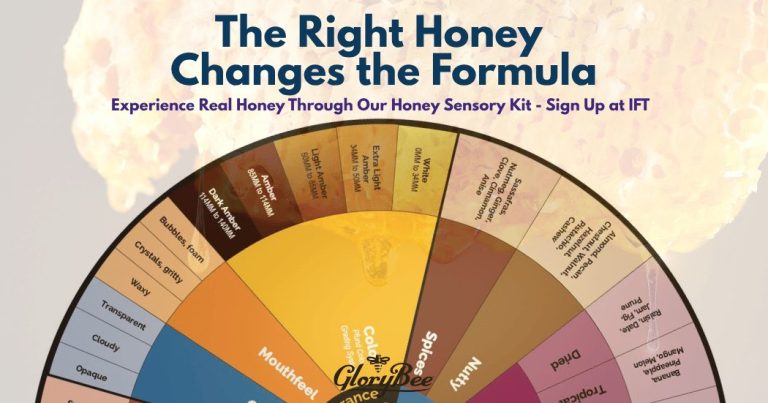
Many people think of honey as a single flavor. It is sweet, golden, and familiar.
In reality, honey is an incredibly diverse ingredient. Its flavor, aroma, color, and texture can change depending on the flowers visited by the bees, the region where the honey was produced, seasonal conditions, and how it is processed.
These differences are more than interesting tasting notes. For food scientists, product developers, and manufacturers, they can influence how honey performs within a formulation and how consumers experience the finished product.
At IFT FIRST 2026, GloryBee is giving attendees the opportunity to sign-up and experience these differences through our honey sensory kit.
Honey Is Not Just One Flavor
Honey reflects the environment in which it is produced. Bees collect nectar from the flowering plants available to them, and those floral sources help shape the characteristics of the finished honey.
That is why orange blossom honey does not taste the same as blackberry blossom honey. Clover honey offers a different sensory experience than wildflower honey, while baker’s honey brings another combination of color, aroma, and flavor.
GloryBee’s honey varieties and grades include profiles ranging from mild and herbaceous to fruity, citrusy, earthy, tropical, warm, and robust.
Tasting several honeys side by side makes those differences much easier to recognize. A honey that initially seems simply “sweet” may reveal floral aromas, fruit notes, warm caramel characteristics, mild spice, or a lingering earthy finish when compared with another variety.
What to Look for During a Honey Tasting
A honey sensory experience involves more than identifying which sample tastes the sweetest. Each honey can be evaluated through several characteristics.
Color
Honey colors range from nearly clear to dark amber. Color can provide an early indication of what to expect, although appearance alone does not tell the complete flavor story.
Aroma
Before tasting, the aroma may reveal floral, fruity, citrus, herbal, earthy, or warm notes. These aromatics can play an important role in the overall sensory experience of both the honey and the product in which it is used.
Flavor
Some honeys are light and delicate, while others are richer and more assertive. The flavor may appear immediately or develop gradually as the honey moves across the palate.
Texture
Viscosity and mouthfeel can also affect the tasting experience. Honey may feel smooth, thick, creamy, or especially easy to drizzle depending on its variety, temperature, and handling.
Finish
The flavor that remains after tasting may be clean and mild or deeper and longer-lasting. That finish can influence how well a honey complements other ingredients in a formulation.
Evaluating these characteristics helps product development teams move beyond sweetness and begin thinking about honey as part of a larger flavor system.
Different Varietals Create Different Opportunities
The right honey depends on the product being developed and the experience a brand wants to create.
California Orange Blossom Honey offers a light, floral profile with citrus characteristics. That brightness may work well in beverages, salad dressings, frozen desserts, fruit-based products, and formulations where the honey should complement other delicate flavors.
Pacific Northwest Blackberry Honey provides a rich, warm sweetness with fruity notes and a subtle hint of spice. Its character can bring depth to sauces, bakery products, snack bars, ice cream, and sweet and savory applications.
Clover honey is known for its familiar, mild flavor, which blends easily into many products without overpowering other ingredients. This can make it a versatile option for beverages, cereals, snacks, sauces, and everyday food applications.
Baker’s Light Amber Honey has a stronger flavor and darker color than classic clover honey. Its warm, robust profile complements flour and grains, making it especially useful in breads, granola, baked goods, and snack products.
These examples demonstrate why choosing honey based only on price, sweetness, or color can mean overlooking an opportunity to improve the finished product.
Sensory Evaluation Supports Better Product Development
When developers taste honey varieties side by side, they can begin matching sensory characteristics to specific product goals.
A mild honey might allow fruit, botanical, or dairy flavors to remain at the center of a formulation. A citrus-forward honey could reinforce the brightness of a beverage or dressing. A darker, more robust honey may provide the depth needed to balance whole grains, chocolate, smoke, vinegar, or spice.
The honey must also be considered alongside every other part of the formula. Processing temperatures, ingredient ratios, acidity, flavor interactions, and the point at which honey is added can all affect how much of its character remains in the finished product.
That is where sensory evaluation and technical expertise come together. GloryBee’s honey research and development services can help manufacturers evaluate honey options based on formulation, application, and brand objectives.
Sign Up for the GloryBee Honey Sensory Kit at IFT FIRST 2026
Understanding varietal honey on paper is useful, but tasting it offers a whole different level of understanding.
At IFT FIRST 2026, attendees can sign up at GloryBee booth #1672 for a honey sensory kit featuring multiple varieties selected to demonstrate the diversity of real honey. The kit is available only by signing up at the GloryBee booth during the event.
Our team will also be available to discuss how different honey profiles can support beverages, condiments, snack bars, baked goods, ice cream, and other product categories.
Visit booth #1672 to taste real honey, explore new flavor possibilities, and discover how choosing the right variety can help turn sweetness into a more memorable product experience.