
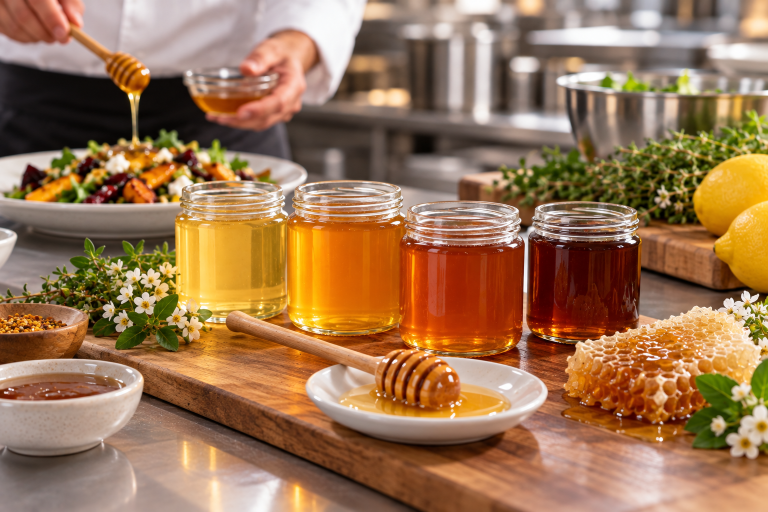
Honey is more than a sweetener in professional kitchens. It can add depth to sauces, balance acidity in dressings, enhance baked goods, and bring distinctive flavor to beverages and specialty menu items.
For chefs and foodservice operators, choosing honey involves more than finding the right flavor. Freshness, consistency, and overall quality can influence how an ingredient performs in a recipe.
As restaurants explore new menu trends and ways to highlight quality ingredients, understanding what makes honey a reliable choice can help chefs make more informed purchasing decisions.
Why Honey Quality Matters in the Kitchen
Not all honey tastes or performs the same way. Different floral sources produce variations in color, aroma, sweetness, and flavor intensity. A lighter honey may provide subtle sweetness without overpowering other ingredients, while a darker variety may contribute a more pronounced flavor to marinades, glazes, or baked goods.
Consistency is equally important. When a restaurant develops a signature sauce or dressing, unexpected changes in honey flavor or appearance can affect the finished dish.
Understanding how honey quality is measured can help foodservice buyers evaluate ingredients beyond price alone.
Understanding Honey Freshness and HMF Testing
One factor used to evaluate honey quality is hydroxymethylfurfural, commonly called HMF.
According to the USDA National Agricultural Library, HMF is a compound that forms as sugars in honey break down. Its concentration generally increases with prolonged storage or exposure to elevated temperatures, making it a useful indicator of honey’s storage history and heat exposure.
Laboratories can measure HMF levels as part of a broader quality evaluation. However, HMF testing alone does not establish honey purity or authenticity.
For chefs, the important takeaway is that processing, storage, and handling conditions can influence honey quality. Working with a supplier that monitors these factors can help foodservice businesses maintain consistent ingredient standards.
How Honey Fits Into Foodservice Menu Trends
Honey’s versatility makes it useful across a wide range of menu applications. Sweet-and-spicy combinations, including hot honey, also give restaurants opportunities to experiment with familiar ingredients in new ways.
Some ways chefs can incorporate honey include:
- Hot honey: Adding sweet heat to pizza, fried chicken, sandwiches, and appetizers.
- Glazes and marinades: Balancing sweetness with savory, smoky, or spicy flavors.
- Salad dressings: Complementing acidic ingredients such as vinegar, citrus, and mustard.
- Baked goods and desserts: Adding sweetness and flavor to breads, pastries, and toppings.
- Beverages: Sweetening specialty teas, lemonades, cocktails, and other drinks.
Choosing the right honey variety can make a difference. A mild honey may complement a delicate dressing, while a more robust variety can stand up to bold spices and richer dishes.
Highlighting Honey Quality on the Menu
Customers may not be familiar with technical honey testing, but they can appreciate thoughtful ingredient selection. Menu descriptions such as “honey-glazed roasted carrots” or “spicy honey drizzle” communicate flavor while drawing attention to the ingredient.
Restaurants can also highlight a honey’s floral variety or geographic origin when those details are accurate and supported by supplier documentation. Claims such as “pure,” “raw,” or “locally sourced” should only be used when they can be verified. The goal is to communicate ingredient quality in a way that adds value to the dining experience without overwhelming customers with technical details.
Choosing a Reliable Honey Supplier
A dependable honey supplier should offer more than an appealing flavor. Foodservice buyers should consider consistent specifications, quality documentation, packaging options, and reliable deliveries.
Storage and handling are also worth discussing. Understanding how honey should be stored can help kitchens maintain its intended characteristics.
For restaurants, bakeries, and commercial kitchens, these considerations support consistent recipes and greater confidence in ingredient purchasing.
Bring Quality Honey to Your Menu
Whether you’re developing a hot honey-inspired dish, refining a signature dressing, or sourcing honey for everyday kitchen use, ingredient quality matters.
At GloryBee, we understand the importance of honey quality, consistency, and dependable sourcing. Our team can help foodservice buyers explore bulk honey options suited to their culinary applications.
Contact us to discuss your ingredient requirements and find the right honey for your menu.