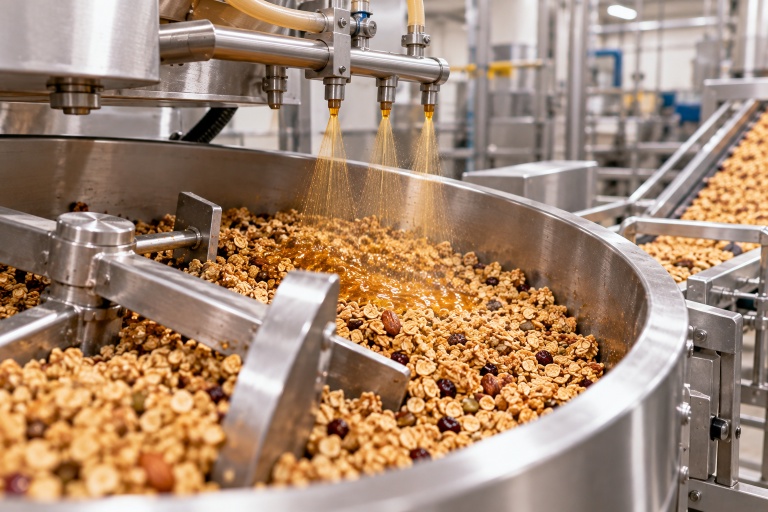
Honey is a familiar ingredient in granola and cereal products, valued for its sweetness, flavor, and versatility. For food manufacturers, it can serve several purposes beyond simply replacing refined sugar. From helping ingredients stick together to creating flavorful coatings, honey can influence the texture, appearance, and overall appeal of finished products.
Understanding how honey performs in granola and cereal production can help manufacturers make informed decisions about ingredient selection, formulation, and processing.
Why Use Honey in Granola and Cereal?
Honey provides a combination of sweetness, flavor, and functional properties that make it useful in many granola and cereal formulations. Unlike refined white sugar, honey contains water and a mixture of naturally occurring sugars, primarily fructose and glucose. These characteristics can affect how honey behaves during mixing, baking, and coating.
Honey also offers flavor flexibility. Lighter varieties generally provide a milder sweetness, while darker varieties may contribute more pronounced flavor notes. For manufacturers exploring bulk honey options, choosing a variety with consistent characteristics can help maintain the desired flavor and appearance across production batches.
How Honey Works as a Binder in Granola
One of honey’s most useful applications in granola production is helping dry ingredients adhere to one another. When combined with ingredients such as oats, nuts, seeds, and oils, honey can contribute to the formation of granola clusters. During baking and cooling, the coating helps hold ingredients together, although the final texture also depends on the complete formulation and processing conditions.
Several factors can influence how effectively honey works as a granola binder:
- Honey concentration: The amount used affects sweetness, coating coverage, and cluster formation.
- Moisture content: Honey contributes water to the formulation, which must be considered when targeting a specific finished texture.
- Mixing consistency: Even distribution helps ingredients receive a more uniform coating.
- Baking conditions: Temperature and baking time influence browning, moisture loss, and crispness.
Manufacturers may need to adjust their formulations when replacing another sweetener with honey rather than assuming a direct one-to-one substitution will produce identical results.
Honey vs. Sugar in Granola Production
Both honey and refined sugar can provide sweetness, but they behave differently during processing. Granulated sugar is a dry ingredient, while honey is a liquid containing both sugars and water. This difference can affect ingredient distribution, moisture management, and the texture of the finished granola.
Honey also contributes its own flavor and can participate in browning reactions during heating. Depending on the recipe, this may help create the golden appearance associated with many baked granola products. However, using honey does not automatically make a product healthier or lower in sugar. Manufacturers should evaluate the nutritional composition of the complete recipe and ensure that any product claims are accurate.
Using Honey for Cereal Coatings
Honey can also be incorporated into coatings for ready-to-eat cereals, including flakes, clusters, and puffed grain products. In these applications, honey may be blended with other ingredients to create a coating that adds sweetness and flavor to the cereal surface.
Achieving consistent coverage is important, particularly in large-scale production. Manufacturers must consider factors such as coating viscosity, application temperature, drying conditions, and the cereal’s ability to withstand handling. Because honey contains moisture, the coating and drying process must be carefully managed to help achieve the desired crispness and shelf stability.
Using Dry Honey in Cereal Manufacturing
Dry honey, sometimes referred to as honey powder, is another option for manufacturers developing cereal and granola products. Depending on its formulation, it can offer advantages in dry ingredient blending, seasoning applications, and processes where adding liquid honey may be less practical.
However, dry honey products vary in composition and may contain carriers or other ingredients. Manufacturers should review product specifications to understand the actual honey content and determine whether the ingredient meets their formulation and labeling requirements. Liquid honey and dry honey are not necessarily interchangeable, so testing is important before making substitutions.
Choosing Honey for Commercial Production
When sourcing honey for granola and cereal manufacturing, consistency is especially important. Differences in flavor, color, moisture, or handling characteristics can affect finished products, particularly when honey is used in large quantities.
Food manufacturers should consider ingredient specifications, available packaging formats, supply reliability, and how the honey will perform under their production conditions. Understanding how honey quality is measured can also help purchasing and product development teams evaluate potential ingredients.
Find the Right Honey for Your Granola or Cereal Products
Whether you’re developing a new granola recipe, refining a cereal coating, or exploring alternatives to refined sugar, selecting the right honey can make a difference in your finished product.
At GloryBee, we understand the importance of consistent ingredients for commercial food production. Our team can help manufacturers explore honey options that fit their formulation and sourcing needs.
Contact us to discuss your ingredient requirements and find honey suited to your granola or cereal production.